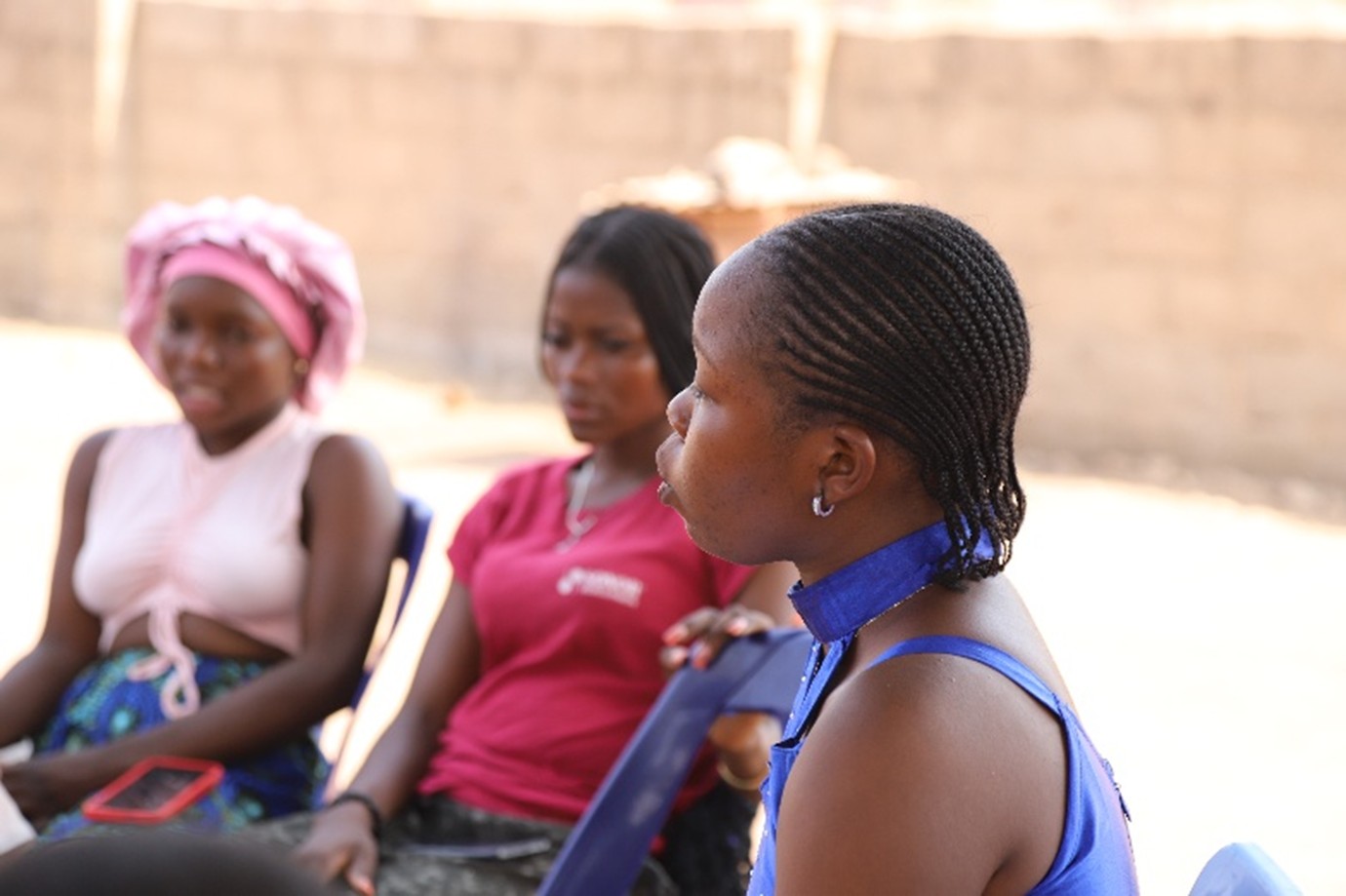
Sunen Keziah during a peer-to-peer session in Benue State
When these barriers persist, women and girls may be left with limited options, some of which can have serious consequences for their health, potential, and futures. Through the Improving Reproductive Autonomy for Women and Girls in Nigeria project, funded by Global Affairs Canada, that narrative is changing. Ipas Nigeria is working in Benue, Oyo, and Borno states to empower women and girls with accurate information that supports informed decisions about reproductive health. Using peer-to-peer programming, participants receive trusted, judgment-free information that dispels harmful myths and reduces self-stigma and shame around accessing reproductive health services.
I didn’t know about safe abortion in health facilities’ says Sharon ‘some of my peers thought contraception was only for married women, but now we understand it is for both women and young girls.
Gwagodu Sharon, Peer educator, Benue State.
Women and girls are now able to make safer decisions for themselves with the right information on reproductive health and where to access these services. Hadiza, a peer educator in Borno State, shares: “There was a woman who told me she uses traditional medicine for family planning, but she was happy when she learned about the contraception options she can access at the hospital.”
These sessions have empowered participants to advocate for themselves, negotiate life-changing decisions with greater confidence, and influence others with accurate information on reproductive health. “I have learned about making decisions for myself. When my family members spoke to me about decisions before, I would be very agreeable, but now I have learned to negotiate…I convinced two of
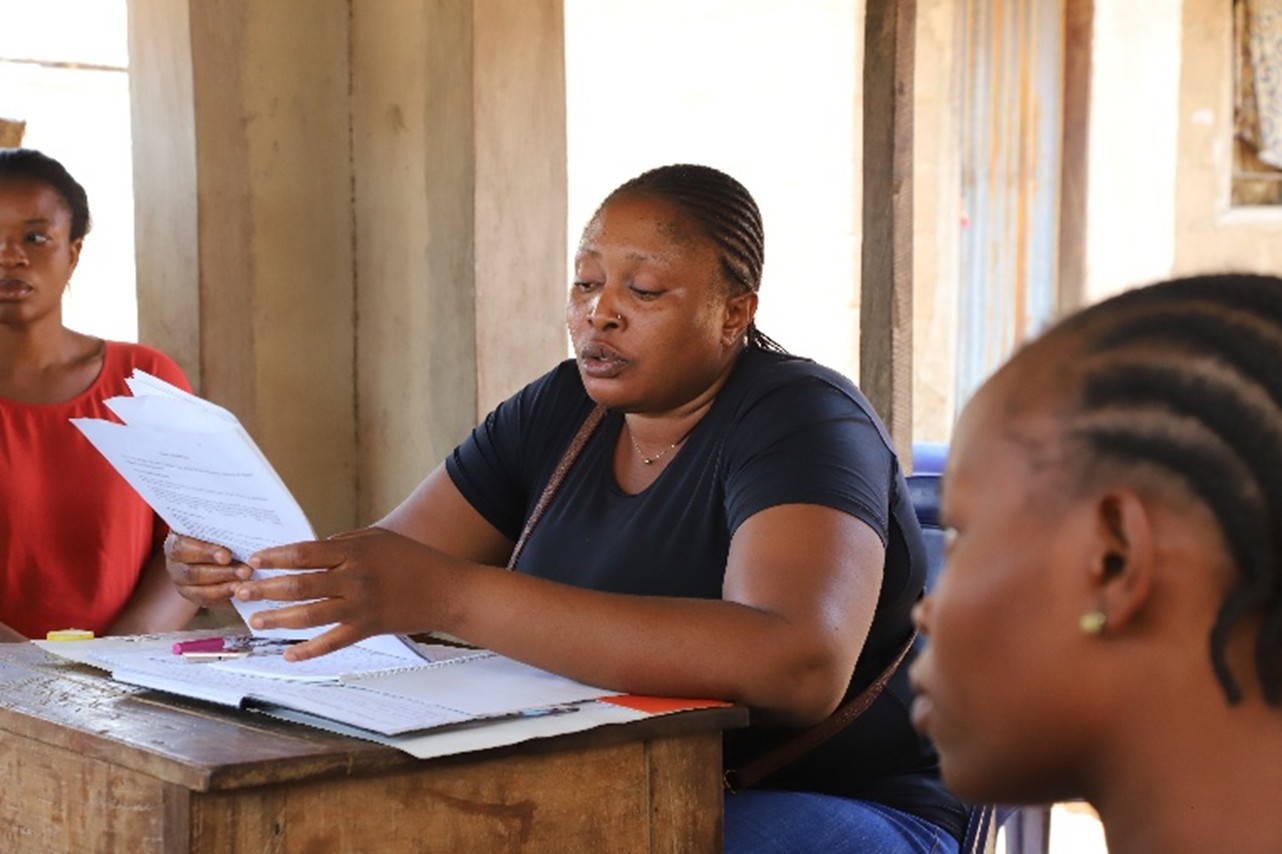
Sharon Gwodu engaging with other peers during a peer-to-peer session in Benue State
As more women and girls gain access to clear, respectful information through peer-to-peer learning, they are better equipped to protect their health and support others to do the same. By replacing myths with facts and shame with confidence, communities across Benue, Oyo, and Borno are taking meaningful steps toward reproductive autonomy.