Addressing community norms related to sexual and reproductive health in Nigeria presents multifaceted challenges due to religious, moral, and cultural constraints. Additionally, longstanding information surrounding abortion and contraception care has perpetuated stigmatizing opinions, limiting both the uptake and provision of essential services. Over the years, Ipas has championed initiatives aimed at reducing stigma by employing its Values Clarification for Action Transformation (VCAT) methodology. This approach facilitates constructive dialogue on abortion, particularly in restrictive environments such as Nigeria where discussing the topic remains taboo.
VCAT is a structured and participatory workshop process designed to assist individuals and groups in critically examining personal beliefs, attitudes, and behaviors regarding sensitive subjects, like abortion and contraception care. The methodology has successfully influenced positive change at multiple levels—community, institutional, and governmental.
Under the Life Spring Development Foundation (LSDF) consortium to provide Technical Assistance to the Sector Wide Approach (SWAp) coordination office and the Federal Ministry of Health and Social Welfare, Ipas Nigeria has collaborated with West & Central Africa (WCA) Health Options, equipping them with the tools to design interventions utilizing VCAT. Stigma associated with abortion and contraception care has contributed to an increase in unsafe abortions, accounting for over 13% of maternal mortality rates in the country. Enhancing stakeholder proficiency in VCAT is expected to bring about transformative changes that improve accessibility to safe sexual and reproductive healthcare, thereby reducing maternal mortality.

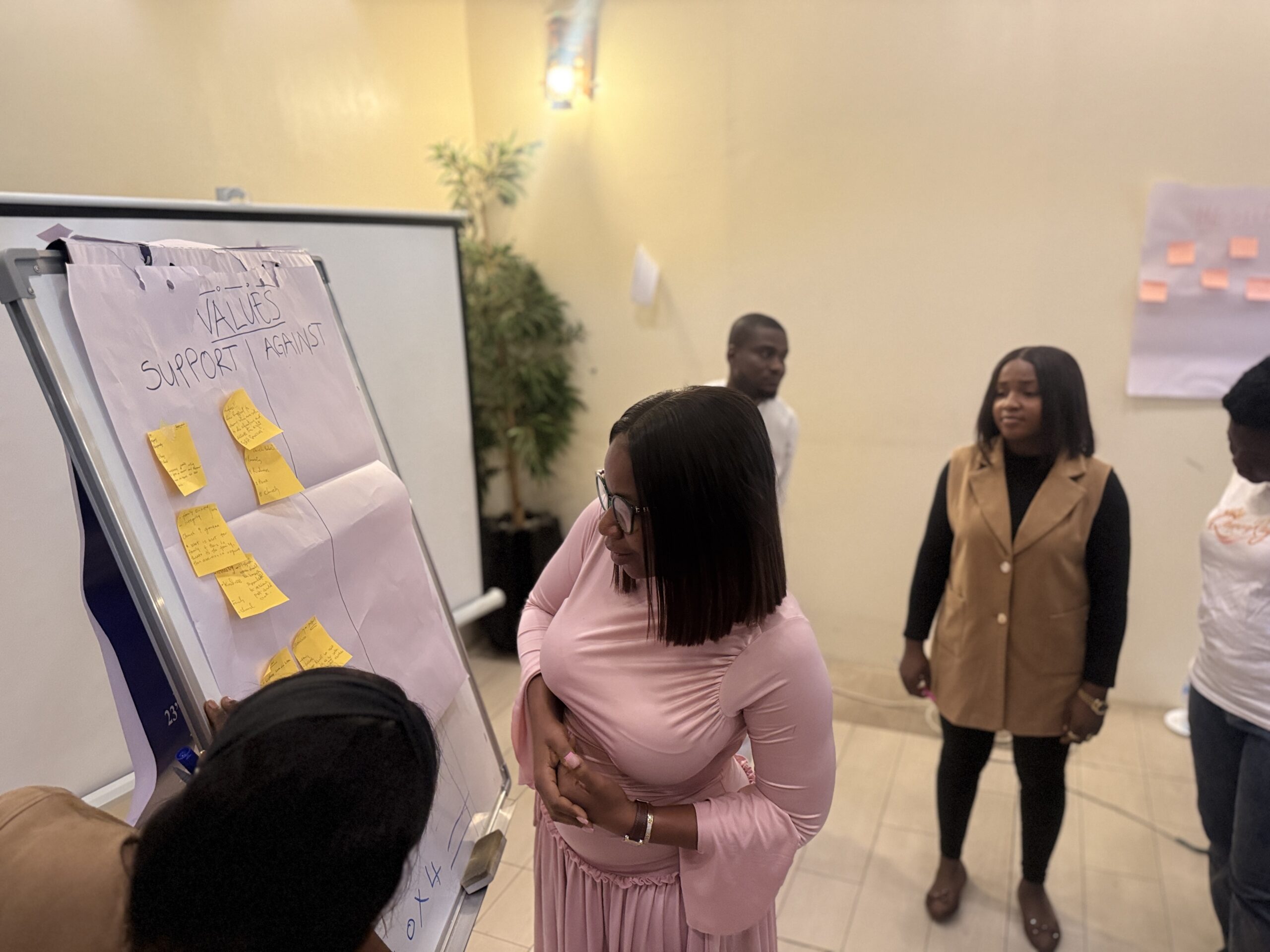
The training empowered participants to implement various exercises that address underlying values related to abortion care, encourage open-minded discussions, and inspire empathetic rather than judgmental attitudes when delivering essential services. Participants understood the importance of VCAT in facilitating respectful discussions that support independent values and choices, rather than imposing personal beliefs.
I have learned that women do not have abortions for intangible reasons. I have a better understanding from the training to be able to discuss on this subject with other stakeholders’ – Joy Adams, Big Sister Officer, WCA Health Options.
Tailored exercises for diverse audiences
Participants were further equipped to simplify technical aspects of these conversations by introducing tailored exercises for diverse audiences. Multiple learning methods were explored, enabling participants to practice and refine their approach according to varying contexts and needs. This experience allowed them to openly confront personal apprehensions and learn effective communication strategies.
“I have understood the depth of how I can use VCAT to launch conversations on abortion and contraception,” said Ibrahim Sheye Sam, State Program Manager, WCA Health Options. “With this training, I feel very equipped to engage different people, and I can also adopt VCAT for other stigmatizing areas in sexual and reproductive health, too.”

The VCAT methodology has demonstrated its effectiveness in reframing abortion as a component of healthcare, mitigating moral judgment, and ensuring life-saving care can be accessed by women and girls who require it. This training has strengthened WCA Health Options’ capacity to facilitate access to safe abortion and contraception care, supporting efforts to decrease maternal mortality rates in Nigeria.

“I have learned the different types of facilitation and during one of the VCAT sessions, I got to understand a person’s life can be dependent on my opinion. So it is important that my opinions do not stop people from having safe abortion care,” said Prudence Akinola, Project Associate, WCA Health Options.